Why it matters. South Korea has long had one of the world's heaviest drinking cultures, so a broad, sustained decline signals a major social shift in a country where alcohol is woven into business and social life.
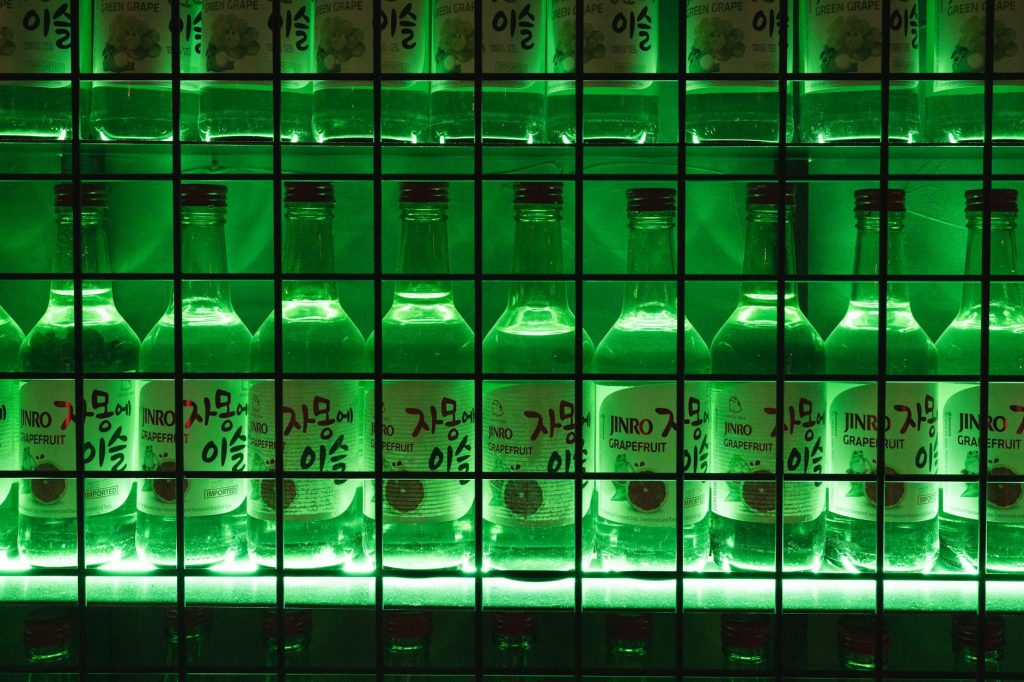
Background. Soju, a clear distilled spirit, is Korea's national drink, and after-work team dinners known as 'hoesik' have traditionally pressured employees to drink heavily with colleagues and bosses. HiteJinro is the dominant soju maker, and its Chamisul brand is a market benchmark, so even a 0.3-point cut in alcohol content reflects an industry-wide pivot. The Korea Disease Control and Prevention Agency is the government public-health body that tracks national binge-drinking rates.
What to watch next. Expect Korean liquor makers to keep expanding low- and no-alcohol lines as younger, health-focused consumers reshape the market.
South Koreans are drinking less, and the data proves it
South Korean households cut their real spending on alcohol by 9.0 percent in the first quarter of 2026 compared with a year earlier, the steepest quarterly drop since the country’s statistics agency began its current data series in 2019, according to figures released on June 2. The decline spans every age group as a culture once defined by heavy group drinking gives way to health-conscious habits.
Average monthly household spending on alcohol fell to 13,000 won (about US$9.50) in inflation-adjusted terms. That marks the tenth straight quarter of decline since late 2023, signaling a trend that has become entrenched rather than a one-off dip. Even in nominal terms, which include price increases, spending fell 7.5 percent year on year, an eighth consecutive quarterly drop.
Every generation is pulling back
The retreat is not limited to young people, though they lead it. Households headed by someone under 40 cut nominal alcohol spending by 5.7 percent, while those in their 40s reduced it by 5.1 percent. The sharpest fall came from drinkers in their 50s, long stereotyped as Korea’s most devoted, who slashed spending by 10.2 percent. Households headed by people 60 and older trimmed theirs by 6.9 percent.
Because Korea’s household survey lumps non-alcoholic and alcohol-free beverages into the same category, analysts say the true drop in pure alcohol consumption is likely even larger than the headline numbers suggest.
Shipment data tells the same story. Domestic alcohol shipments totaled 3.15 million kiloliters in 2024, down 17.3 percent from 3.81 million kiloliters a decade earlier. Binge drinking is fading too: the median monthly binge-drinking rate across Korea’s 17 regions slipped to 33.8 percent last year from 35.8 percent, according to the Korea Disease Control and Prevention Agency.
How the industry is responding
Korean alcohol makers are scrambling to adapt to what marketers call the “healthy pleasure” consumer, who wants the taste and social ritual of drinking without the health toll. Companies are expanding low-alcohol, non-alcoholic and low-calorie lines. On June 2, HiteJinro, the country’s largest liquor company, said it would lower the alcohol content of Chamisul Fresh, its flagship soju brand, from 16 percent to 15.7 percent, the first such change in roughly two years and four months. The firm cited a steady consumer shift toward milder drinks.