Why it matters. Housing supply and prices are among the most politically charged issues in South Korea, so a sharp swing in new apartment launches signals shifting affordability and market sentiment that ripple through the broader economy.
Background. Most South Korean apartments are sold off-plan through a regulated pre-sale subscription system, where buyers enter a government-run lottery for units before they are built. The greater Seoul area, home to roughly half the country's 51 million people, dominates demand, and redevelopment of aging neighborhoods is a key source of new urban supply. Zigbang is a major Korean proptech platform whose data is routinely cited as a market indicator.
What to watch next. Watch whether June's ambitious launch schedule actually materializes or slips again, and whether rising construction costs push pre-sale prices higher.
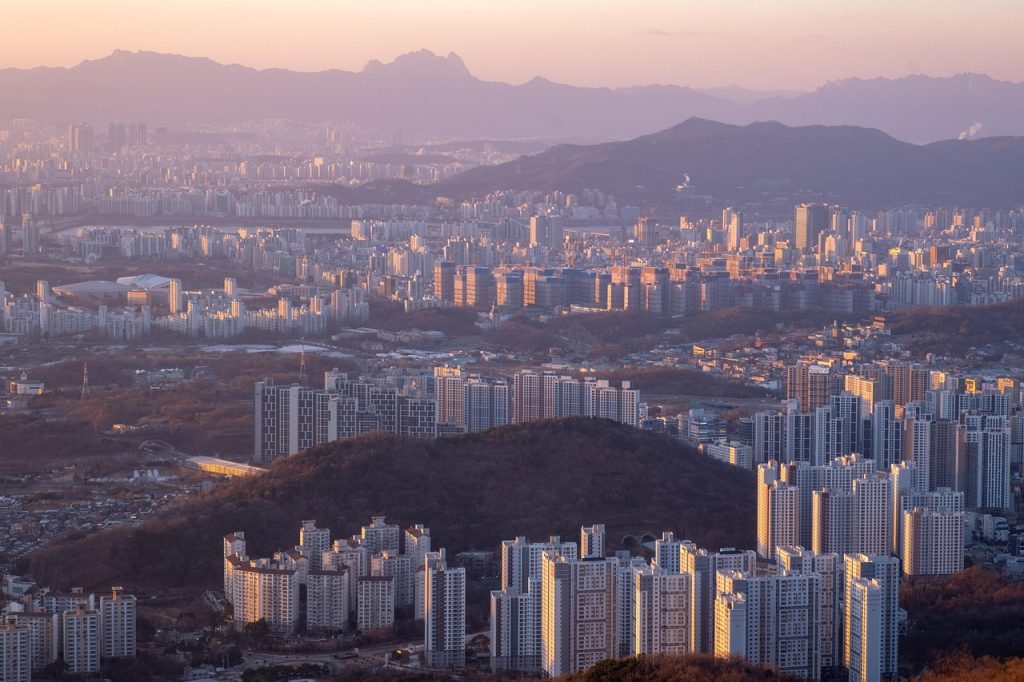
Builders across South Korea are set to launch roughly 30,126 new apartment units for sale in June 2026, more than double the 14,998 units offered a year earlier, according to data released June 1 by Zigbang, a leading South Korean property-tech firm. The surge is concentrated in the greater Seoul region, which accounts for 65 percent of the planned supply.
Where the new homes are going
Of the total, 19,524 units are slated for the Seoul metropolitan area, with the remaining 10,602 spread across the rest of the country. Gyeonggi Province, the populous region surrounding the capital, leads with 12,864 units. Major projects there include developments in Osan, Bucheon, Goyang and Uijeongbu, alongside continued supply in Pyeongtaek’s Godeok district, a planned “international city” zone.
Seoul itself will see 3,803 units come to market, largely through redevelopment of older neighborhoods (known locally as “jeongbi” projects). Notable launches include a 1,931-unit complex in Jangwi-dong, Seongbuk District, and smaller projects in the Yeongdeungpo, Dongjak and Nowon districts. Incheon, the port city west of Seoul, will add 2,857 units, centered on its large-scale Geomdan new-town development.
“General sale” units — apartments offered to the open public rather than reserved for existing redevelopment members — are also rising sharply, from 12,790 to 25,097 units, a 96 percent jump.
Why supply is volatile
The figures come with a caveat: planned launches in Korea frequently slip. In May, builders had scheduled 19,278 units but delivered only 12,542, as project timelines, permits and marketing plans shifted. Some May launches were pushed into June, illustrating how fluid the pipeline remains.
Zigbang said demand for new pre-sale apartments is holding firm, driven by worries over a shrinking pipeline of new construction and the prospect of higher prices as building costs climb. The firm noted that strong subscription results are no longer limited to sought-after metropolitan complexes, with some regional projects also drawing solid demand.
The bigger picture
In South Korea, most new apartments are sold through a regulated pre-sale system, in which buyers purchase units before construction is complete via a government-run subscription lottery. Because this off-plan model dominates the market, monthly “planned supply” figures are watched closely as a barometer of housing availability and price direction.