Why it matters. Korea is trying to turn a winter fruit into a year-round export, a test case for how climate-stressed agriculture can use technology to stay competitive in premium Asian markets.
Background. "K-strawberry" rides the same branding wave as K-pop and K-food, marketing Korean products on a premium national identity. aT (the Korea Agro-Fisheries & Food Trade Corporation) is a state-run body that promotes farm exports, and such government-supplied briefings are a common, semi-official channel in Korean media. The fruit's high price abroad reflects costly air freight needed to keep it fresh.
What to watch next. Watch whether aT and firms like Ecovut can validate indoor smart-farm strawberry production at commercial scale to fill the summer export gap.
South Korea’s state-run agricultural trade agency aT held a technical briefing in Seoul on June 5, 2026, to explore year-round strawberry cultivation as a way to counter climate change and expand exports of the country’s prized “K-strawberries.”
The event, hosted at the aT Center, brought together industry players and experts to assess whether indoor smart-farming systems could break strawberries free of their winter-only growing season and fill the summer gap when exports currently stall.
Why Strawberries Matter to Korea
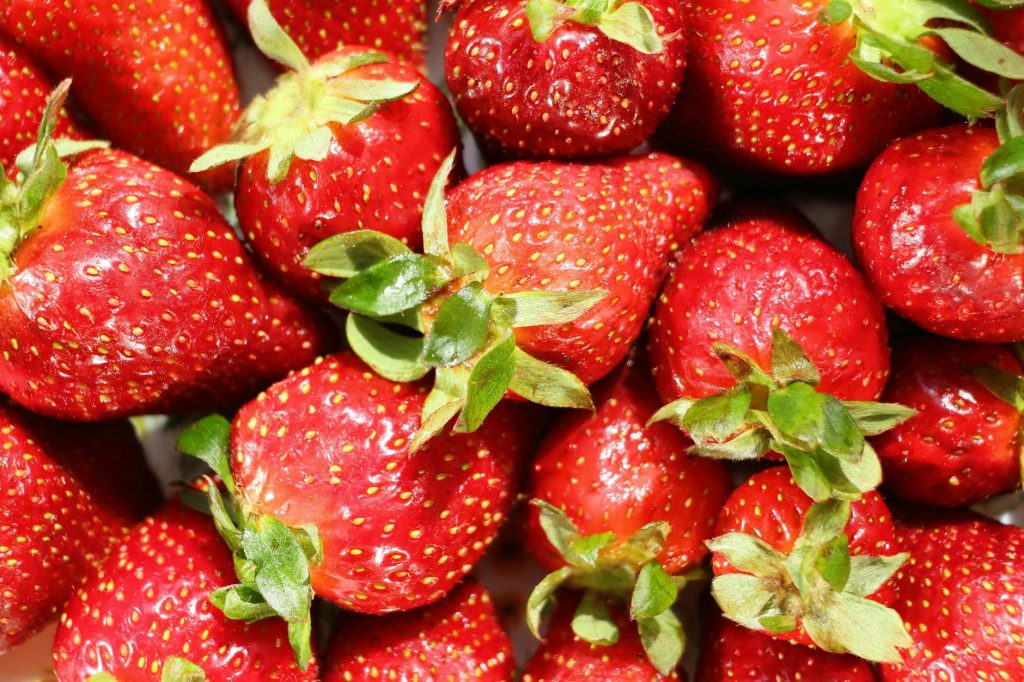
Strawberries have become one of South Korea’s most valuable horticultural crops. In 2024, domestic output reached roughly 155,000 tonnes, prized for high sugar content, firm texture, and aroma. Abroad, those same qualities have built a loyal following, with “K-strawberry” branding mirroring the global marketing of Korean culture and food.
The export numbers underline the momentum. As of late April 2026, strawberry exports totaled $56.87 million, up 16.6% from a year earlier, despite the cost of air-freighting the delicate fruit and rising fuel prices. Full-year 2025 exports hit $72 million, led by Thailand ($19.7 million), Singapore ($19.5 million), Hong Kong ($10 million), and Vietnam ($7.5 million).
The Seasonal Problem
Strawberries are notoriously sensitive to temperature and growing conditions, so production and consumption cluster in the winter months. That leaves a supply vacuum in summer, just as rival producing nations race to build year-round growing and distribution systems. Recent abnormal heat waves linked to climate change have added urgency, threatening the stable harvests that exports depend on.
To address this, aT invited Ecovut, a Korean agricultural company specializing in smart-farming breeding technology, to present a possible solution: modular indoor smart farms that precisely control temperature, humidity, light, and carbon dioxide. By managing the growing environment artificially, the approach aims to reduce seasonal limits and deliver consistent, uniform harvests throughout the year.
What aT Plans Next
The agency framed the briefing as a starting point rather than a finished plan. Participants discussed how well the indoor technology could perform and what still needs to be verified before wider adoption. aT said it will share smart-farming information, examine whether the summer export gap can be closed, broaden its network of production-technology partners, and study ways to scale up year-round K-strawberry volumes.
Hong Moon-pyo, president of aT, called strawberries “a high-value item that shows the potential of K-food and contributes to raising farm incomes.” He pledged to “examine the feasibility of four-season production step by step” and to strengthen the stable supply and export competitiveness of fresh produce in the face of climate change.
aT — the Korea Agro-Fisheries & Food Trade Corporation — is a government body tasked with supporting Korean farmers and promoting agricultural exports, making it a central player in the country’s drive to turn food into a cultural and economic export alongside music and film.