Why it matters. Seoul runs one of the world's busiest and most admired metro systems, yet it is bleeding money on every ride — a warning sign for how aging societies everywhere will pay for public transit.
Background. South Korea has guaranteed free subway travel to riders aged 65 and older since the 1980s as a national welfare policy, but the bill is paid by local operators, not the central government. With the country aging faster than almost any nation on earth, the cost of that promise is escalating. Seoul Metro is owned by the Seoul Metropolitan Government and runs lines 1 through 8.
What to watch next. Pressure is building for the national government to share the free-ride burden, and the dispute over who pays could reshape fare policy and the long-debated proposal to raise the free-travel age above 65.
A Subway That Loses Money on Every Trip
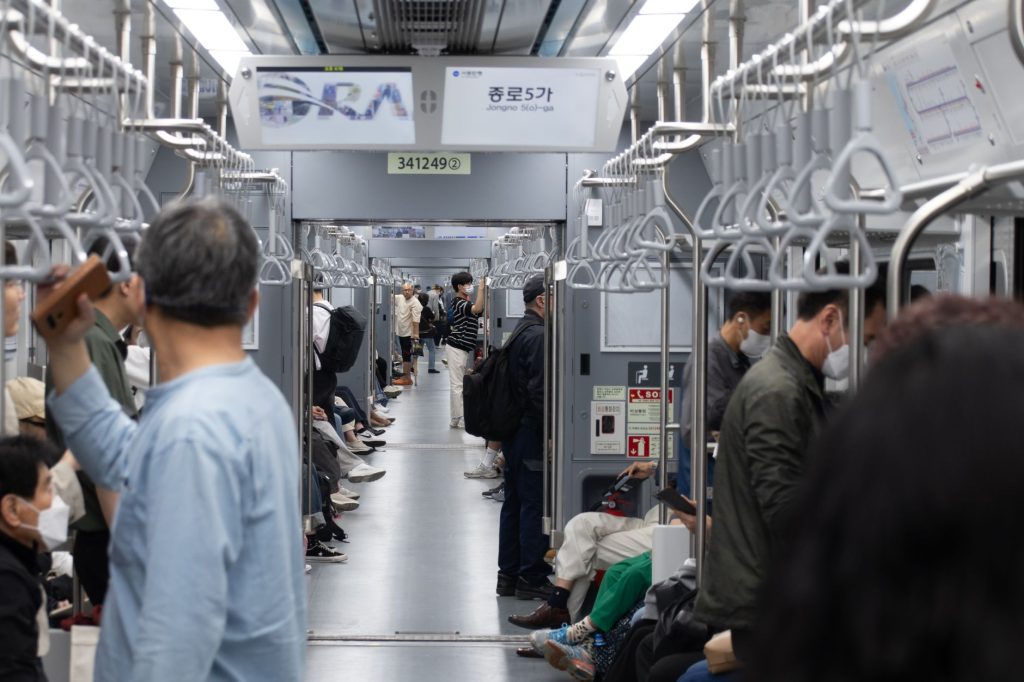
Seoul Metro, the public operator of subway lines 1 through 8 in South Korea’s capital, said on June 11 that it lost an average of 781 won (about US$0.57) for every passenger it carried last year, as the cost of moving each rider far outpaced the fares collected. The shortfall, the company says, is driven largely by government-mandated free rides for elderly passengers and discounted bus-to-subway transfers.
Carrying a single passenger cost 1,817 won in 2025 once labor, depreciation, electricity and other utilities were counted. The average fare actually collected was just 1,036 won — leaving the 781-won gap on every trip. Costs varied by line, from a low of 1,374 won on Line 2 to a high of 2,343 won on Line 6.
Fares Cover Barely Half the Cost
The operator’s cost-recovery ratio — the share of per-passenger costs covered by fares — stood at 57 percent. In other words, ticket revenue pays for only about half of what it costs to run the trains. That figure has been stuck in the low-to-mid 50s for years: 50.2 percent in 2021, 53.3 percent in 2022, 54.7 percent in 2023 and 53.9 percent in 2024.
Notably, the gap persisted even as conditions improved. Ridership rose by 27 million people (1.6 percent) compared with 2024, and fares were raised by 150 won. Yet the average fare collected climbed by only 38 won, underscoring how heavily discounts and free rides weigh on the bottom line.
The Cost of Public-Service Mandates
In 2025 Seoul Metro posted total revenue of 2.37 trillion won against total costs of 3.20 trillion won, producing a net loss of 826.8 billion won. The cost of providing legally required public services came to 816.7 billion won — almost exactly the size of that loss.
The largest single drain was free transit for riders aged 65 and older, which cost 448.8 billion won. Discounted bus transfers added 290.7 billion won, and commuter passes and similar programs another 77.2 billion won. The free-ride loss has grown about 70 percent in five years, from 264.3 billion won in 2020, and is expected to keep climbing as South Korea’s population ages.
Across the country’s six urban-rail operators, free-ride losses totaled 775.4 billion won last year, with Seoul Metro alone accounting for more than half. The company stressed that it absorbs these costs entirely on its own, without support from the national or city government.
Han Young-hee, head of Seoul Metro’s planning division, called free transit “a public service implemented as national policy” and urged the central government to quickly devise a plan to subsidize the losses “to guarantee citizens’ mobility and keep public transit sustainable.”