Why it matters. AI's physical footprint is becoming a global resource issue: the water and power behind chatbots and cloud services are now colliding with worsening droughts, a tension that will surface in every country racing to host AI infrastructure.
Background. This story was reported by South Korea's Hankyoreh, a left-leaning daily known for environmental and labor coverage, drawing on a Guardian investigation rather than original Korean data. Korean readers follow the topic closely because Korea is both a leading semiconductor maker — Samsung and SK Hynix supply much of the world's AI memory chips — and is itself building large domestic data centers, making the US debate a preview of choices Korea will face.
What to watch next. Expect more US states and local governments to introduce water-reporting rules and cooling mandates, with outright bans like Monterey Park's likely to spread as the AI build-out accelerates.
The headline finding
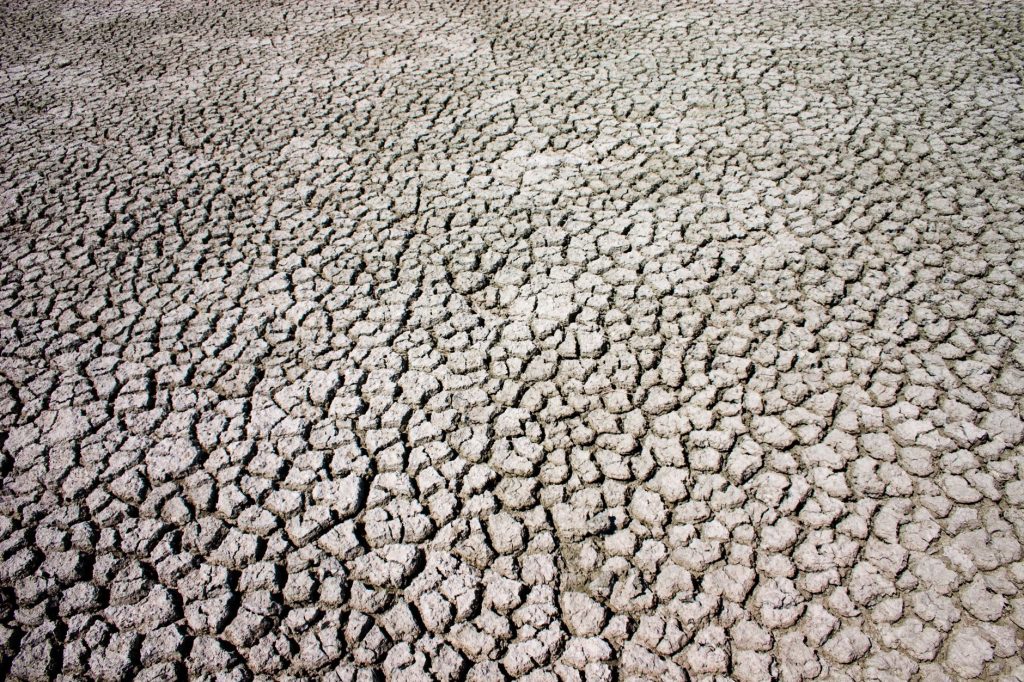
Roughly two-thirds of the data centers planned across the United States are slated for areas that endured the country’s worst drought conditions over the past year, according to a Guardian analysis published on June 8 — raising alarm that the AI boom will deepen water shortages in regions already running dry. Of 809 planned facilities, 517 sit in zones the US federal drought monitor rated “moderate” to “exceptional,” the analysis found.
The pattern is not new to future builds. Of 601 data centers already operating, 392 — about 66% — are also located in drought-stricken areas, an almost identical share.
Why data centers and dry land go together
Data centers consume vast amounts of water to cool the heat their servers generate. A single large facility can require up to 5 million gallons (about 18.9 million liters) per day — comparable to the consumption of 50,000 people. Nationwide, US data centers needed an estimated 17 billion gallons in 2023, a figure the Guardian reports could climb to as much as 73 billion gallons annually by 2028.
Developers gravitate toward arid, sparsely populated areas because land is cheap and tax incentives are generous. Dry climates are also believed to reduce equipment corrosion. The result is a collision course: the US National Oceanic and Atmospheric Administration (NOAA) attributes worsening droughts since 2000 largely to heat-driven evaporation from human-caused climate change, even as the AI industry funnels new water demand into exactly those regions. This spring, about 60% of the country was classified as drought-stricken — among the largest droughts in modern US history.
Flashpoints and pushback
Box Elder County in northwestern Utah recently approved “Stargate,” a 15,000-hectare AI complex billed as the world’s largest data center, in an area gripped by severe drought since last summer — drawing fierce opposition from residents and environmental groups. In Texas, planned facilities in Pecos and Carson counties could account for 9% of the entire state’s water use by 2040, one study projected. Christopher Dalbom, a water expert at Tulane University in New Orleans, warned that shortages are now “inevitable” — and doubted that authorities, when forced to choose, would ask the data center and energy industries rather than ordinary people to cut back.
Industry representatives counter that data centers currently use less water than agriculture, and even less than golf courses and lawn irrigation. Dan Diorio of the Data Center Coalition said operators work closely with regulators and invest in water restoration and recycling. But the Guardian noted a catch: newer “closed-loop” cooling saves water by burning more energy — mostly fossil fuels, which themselves consume water. Meta’s massive “Hyperion” center under construction in Louisiana uses closed-loop cooling yet draws power from 10 gas plants.
The bigger picture
Notably, data centers may be a small part of AI’s total water footprint. A January study led by water-tech firm Xylem projected a 129% rise in water demand across the AI value chain by 2050 — but attributed just 4% of that to data center growth, with power generation (54%) and semiconductor manufacturing (42%) dominating.
The backlash is already reshaping policy. California, Michigan and Iowa are weighing mandatory water-use reporting; South Carolina and Kansas may require closed-loop cooling; and Monterey Park, California, has passed an ordinance permanently banning commercial data centers. A United Nations University report estimates global data centers will use 9.3 trillion liters of water over the next decade — enough to meet more than a year of drinking water for the entire world population.