Why it matters. South Korea is a bellwether for the global semiconductor cycle, so a 115% surge concentrated in two chipmakers is a real-time gauge of how hot the worldwide AI-memory trade has become — and how fragile it could be.
Background. The KOSPI is Korea's blue-chip main board, while the KOSDAQ is its smaller-cap venture exchange; Samsung Electronics and SK Hynix together make up roughly half the main board's value, so 'the market' and 'two chip stocks' are nearly the same thing. Korean retail investors are heavily leveraged through margin loans and single-stock leveraged ETFs, which is why the financial regulator's consumer alert carries weight. The nickname 'man-spi' (man = 10,000) reflects widespread public anticipation of the index hitting five figures.
What to watch next. Watch whether the memory-chip boom and foreign inflows can broaden the rally beyond Samsung and SK Hynix, or whether a hawkish Fed and stretched leverage trigger a sharp reversal toward the brokerages' 10,000-plus targets.
A record few thought possible this fast
South Korea’s main stock index, the KOSPI, closed above 9,000 for the first time in history on Wednesday, June 18, 2026, finishing at 9,063.84 — up 199.60 points, or 2.25%, on the day. The milestone came just 16 trading sessions after the index first cleared 8,000 on May 26, an extraordinarily fast climb driven almost entirely by a global boom in memory-chip stocks. The KOSPI has now risen about 115% so far in 2026, the strongest performance of any major economy and, by Hankyoreh’s count, the top gain among the G20.
The total value of companies listed on the main board hit a record 7,413 trillion won (roughly $5.4 trillion), and brokerages are openly debating when — not whether — the index reaches 10,000, a level Korean traders have nicknamed “man-spi” (man meaning ten-thousand). For international readers, the speed is the headline: turning 8,000 into 9,000 in three weeks is the kind of move that signals both euphoria and concentration risk.
Two stocks are carrying the whole market
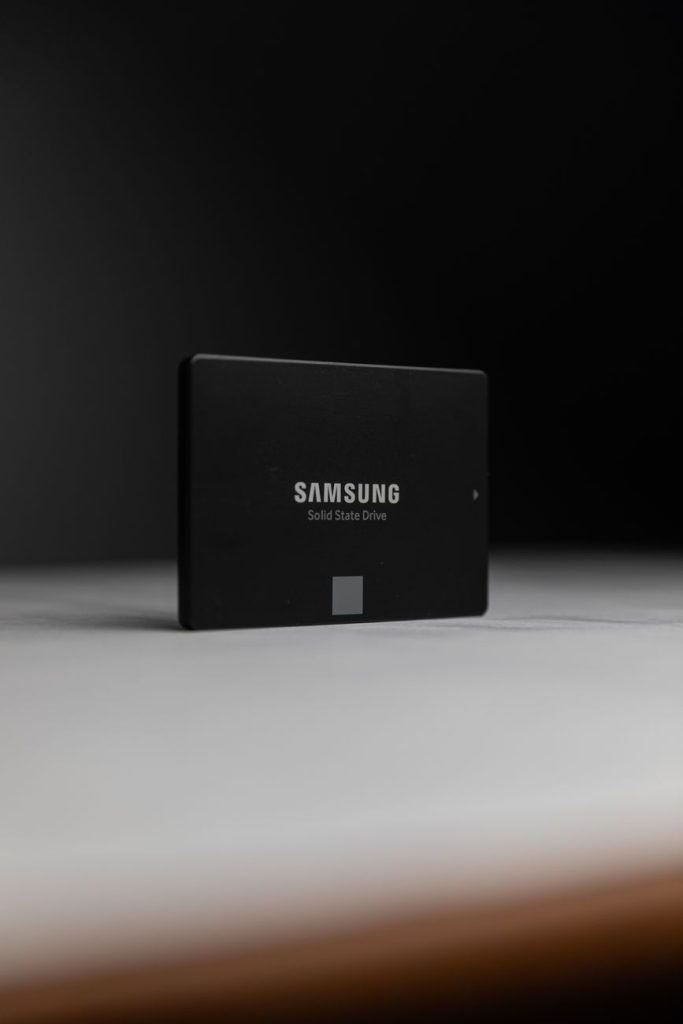
The rally is remarkably narrow. Samsung Electronics, the world’s largest memory-chip maker, rose 4.62% to a record 362,500 won, lifting its market value alone to about 2,119 trillion won. SK Hynix — Samsung’s smaller rival and a key supplier of the high-bandwidth memory used in AI servers — jumped 6.51% to a record 2,685,000 won, trading above 2.7 million won intraday. A fresh catalyst came from abroad: Apple CEO Tim Cook publicly warned that the memory shortage could be prolonged, sending Hynix and affiliated names such as SK Square sharply higher.
Foreign investors did the heavy lifting, net-buying 1.27 trillion won of Korean shares after more than a month of selling. Domestic players took profits instead: individuals sold a net 375 billion won and institutions 778 billion won. Daishin Securities analyst Lee Kyung-min noted that foreign and institutional money was “concentrated” in semiconductors and IT, and the tape showed it — only 109 of the roughly 900 main-board stocks rose, while 791 fell. Within the blue-chip KOSPI 200, just 16 stocks closed higher. In other words, the index hit a record while the typical Korean stock fell.
The other half of the story: a hollowed-out KOSDAQ
While the KOSPI soared, the tech-heavy KOSDAQ — Korea’s secondary exchange, home to smaller venture and growth companies, broadly comparable to the Nasdaq’s small-cap tier — fell more than 3% and briefly broke below 900 before scraping back to close at 1,000.93. Its 2026 gain is just 8.15%, against the KOSPI’s 115%. The KOSDAQ had set its own record above 1,200 in late April but sank as low as 908.46 intraday on June 8. Its combined market value has shrunk by more than 100 trillion won since late April, to 562 trillion won.
Leverage is flowing the same one-sided way. Margin loans on the main board have swelled from 17 trillion won at the start of the year to a record 28 trillion won, while KOSDAQ margin debt has shrunk from 10 trillion to 8 trillion. Korea Investment & Securities analyst Kim Dae-jun captured the mood bluntly: the issue isn’t the 9,000 number itself, he said, but that anyone not riding Samsung and Hynix is gripped by intense “FOMO” — fear of missing out. The chairman of Korea’s venture-business association, Song Byung-joon, warned that policy funds and private investment are pooling into AI and the large-cap KOSPI alone, deepening a structural imbalance.
Why a US-driven selloff didn’t dent Seoul
The timing is notable. At its June meeting, the US Federal Reserve’s Open Market Committee struck a hawkish tone, with voices flagging possible rate hikes, and Wall Street fell. Normally that would drag Asian markets down. Instead the KOSPI rose for a sixth straight session. Hankyoreh attributes the resilience partly to geopolitics: a ceasefire memorandum effectively winding down a US- and Israel-versus-Iran conflict lifted sentiment across the region. Japan’s Nikkei 225 touched a record 71,000 intraday and closed up 1.65%; Taiwan’s TAIEX gained 1.28%. The read-through is that the AI-memory trade and an easing war premium, for now, outweigh US monetary tightening in Asian investors’ minds.
The boom is spilling beyond the trading floor. In Dongtan, the Hwaseong district south of Seoul where many Samsung employees live, apartment prices have climbed 9.57% this year — the fastest in the country — a vivid sign of how concentrated semiconductor wealth is reshaping the real economy.
How far can it run — and what could break it
The price targets are striking. DB Securities and Daishin see the KOSPI reaching as high as 11,700 and 11,500 this year; Eugene Investment, Hana Securities and KB Securities cluster around 10,400, 10,380 and 10,500. Global banks JPMorgan and Morgan Stanley both flag 10,000 as achievable in a bull case. At Hana Bank’s dealing room in central Seoul, staff rang a ceremonial bell to mark the close.
But regulators are signaling caution. On the same day, the Financial Supervisory Service issued a consumer alert on the single-stock leveraged ETFs tied to Samsung and Hynix that have amplified the chip frenzy. Those products have more than doubled in size — from 4.5 trillion won at launch on May 27 to 9.6 trillion won by June 12 — yet posted maximum drawdowns of 36.9% during recent volatility, a reminder that leveraged bets cut both ways. The deeper question for global investors is durability: a record built on two stocks, foreign inflows and a single industry’s cycle is, by definition, a record that can reverse quickly if the memory boom cools or the Fed forces a rethink.
Key takeaways
- The KOSPI closed above 9,000 for the first time ever on June 18, 2026, at 9,063.84 (+2.25%), just 16 sessions after first topping 8,000.
- Up ~115% in 2026, it is the best-performing major market this year, lifted by a global memory-chip boom.
- The rally is dangerously narrow: only 109 of ~900 main-board stocks rose, with Samsung Electronics and SK Hynix doing most of the work.
- The tech-heavy KOSDAQ is being left behind, up just 8.15% and barely holding 1,000, exposing a widening market split.
- Brokerages target 10,000–11,700, but regulators warn on leveraged single-stock ETFs that have seen drawdowns near 37%.