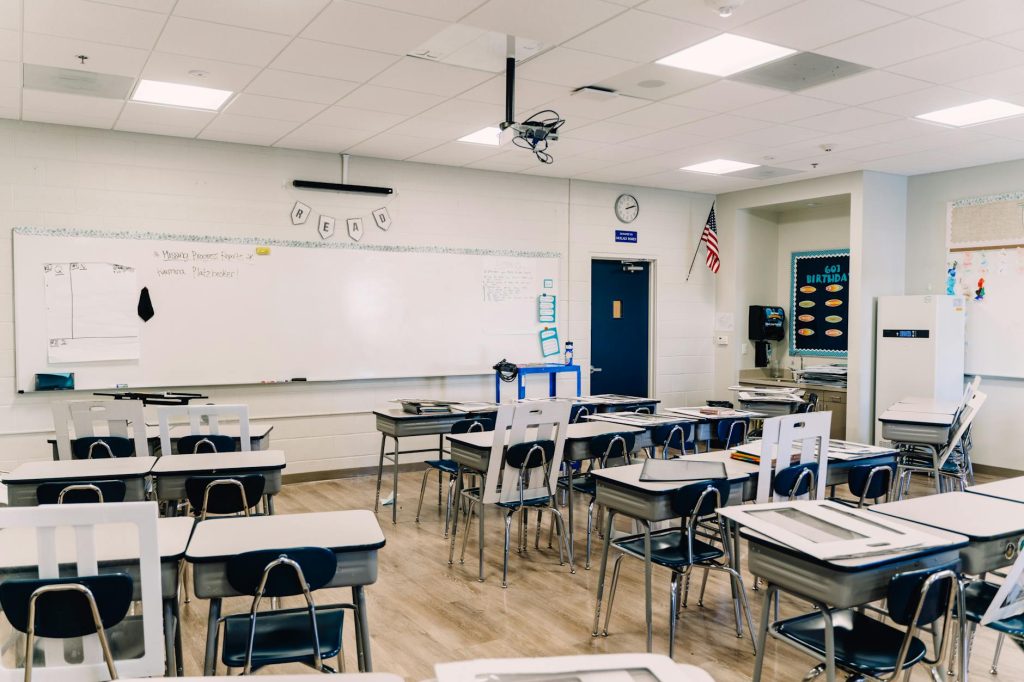
Why it matters. Seoul is one of the world's major capitals, and its rapidly emptying classrooms are a vivid early warning of how South Korea's record-low fertility is reshaping daily life — a demographic challenge other aging societies are watching closely.
Background. South Korea has the world's lowest fertility rate, hovering around 0.7 children per woman, far below the 2.1 needed to keep a population stable. The Seoul Metropolitan Office of Education runs public schooling for the capital, where families have long concentrated for elite academic opportunities; even here, enrollment is collapsing. Shrinking student numbers also threaten teacher jobs, as the government ties teaching quotas to pupil counts.
What to watch next. Expect continued school mergers and closures across Seoul, with officials trying to convert falling enrollment into smaller classes rather than mass classroom shutdowns.
The number of students in Seoul’s schools has fallen below 800,000 for the first time since records began, the Seoul Metropolitan Office of Education announced on June 7, as South Korea’s chronically low birth rate continues to shrink the school-age population across the capital.
According to the office’s 2026 Class Organization Results, the city’s 2,092 schools — spanning kindergartens, elementary, middle, high, special-needs and other schools — now enroll a combined 782,104 students. That is down 28,304, or 3.5%, from 810,408 a year earlier, and marks the first time the figure has dropped into the 700,000s.
A Steady, Decades-Long Decline
The milestone caps a long downward slide. National education statistics show Seoul’s student population first slipped below one million in 2018, at 993,552, then broke through the 900,000 line in 2022, at 880,370. Reaching the 700,000s in 2026 underscores how quickly the trend is accelerating.
Every level of schooling lost students this year:
- Elementary schools saw the steepest drop, falling 16,737 students (4.9%) to 323,802.
- Middle schools declined by 5,694 (2.9%) to 193,896.
- High schools fell by 5,199 (2.6%) to 197,888.
- Kindergartens dropped 709 (1.2%) to 58,683.
Fewer Students, but Classes Held Steady
Notably, Seoul did not cut classrooms as fast as it lost students. The total number of classes fell by 803, or 2.1%, to 37,294 — a slower pace than the 3.5% decline in enrollment. The education office said it had deliberately worked to preserve classes, arguing that doing so improves learning conditions and helps maintain educational quality.
The result is smaller classes. The average number of students per class fell 0.3 to 23.0. Elementary classes averaged 20.8 students (down 0.5), middle-school classes 25.6 (down 0.3), and high-school classes held steady at 24.7.
The total number of schools edged down by 15 to 2,092. Kindergartens fell by 16 to 724, while high schools actually rose by one — to 318 — with the opening of the new Heukseok High School in central Seoul.
Officials Pledge to Get Ahead of the Trend
The Seoul education authority framed the figures as a managed decline rather than a retreat. “Amid a complex set of conditions — a shrinking school-age population, widening regional gaps in student numbers, and reductions in teacher quotas — we have worked to minimize class cuts and steadily lower the number of students per class,” it said. The office added that it would continue right-sizing schools based on medium- and long-term enrollment projections and work to narrow educational gaps between districts, vowing to “respond preemptively to changes in the future education environment.”