Why it matters. Jeju is one of Asia's most-visited islands, and its volcanic geology earned it a rare triple UNESCO designation that most international visitors never fully appreciate.
Background. An 'oreum' is a small secondary volcanic cone; Jeju has roughly 360 of them, formed by past eruptions of Mount Halla, a shield volcano. In 2007 Jeju became the only place to hold three UNESCO natural heritage titles for the same site: Hallasan, the Geomunoreum lava tubes, and Seongsan Ilchulbong. South Korea also runs informal 'stamp tour' programs that encourage citizens to visit heritage sites and collect commemorative stamps.
What to watch next. As Jeju balances mass tourism with conservation, expect more low-impact, education-focused facilities like this center to shape how visitors experience the island.
A Hidden Gateway to Jeju’s Volcanic Wonders
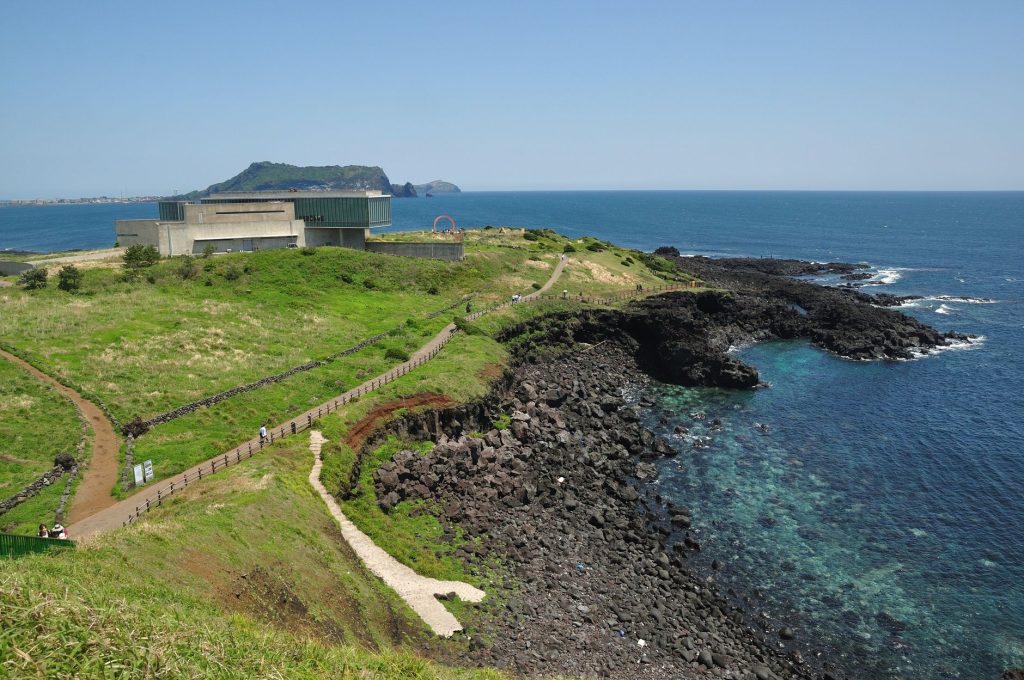
On June 2, a domestic traveler completing South Korea’s national heritage “stamp tour” drove their car onto a ferry to Jeju Island and discovered the Jeju World Natural Heritage Center, a low, ash-gray building near Geomun Oreum that quietly honors the island’s UNESCO-listed volcanic landscape. What looked at first like an ordinary exhibition hall turned out to be an architectural tribute to the very volcanoes it celebrates.
Jeju, a subtropical island off South Korea’s southern coast, is the country’s most popular domestic holiday destination and home to several UNESCO World Natural Heritage sites. The center sits in Jocheon-eup, Jeju City, directly behind Geomun Oreum — an oreum, the Korean word for the small parasitic volcanic cones that dot the island by the hundreds.
Architecture That Disappears Into the Landscape
The visitor noticed the building was designed to blend in rather than stand out. Spread low and wide in volcanic gray, it deliberately avoids blocking the views of the surrounding cones, letting the scenery flow uninterrupted. Only after a staff member explained the design did the deeper logic become clear.
According to the staff, the entire structure is shaped to represent an oreum, which is why the entrance feels like descending underground and the building is built around a hollow center. Inside, the exhibition halls are styled as caves — a nod to the Geomunoreum Lava Tube System, one of Jeju’s signature volcanic features.
What Visitors Can See Inside
The center showcases Jeju’s three UNESCO-inscribed natural treasures through video and physical displays:
- Hallasan Natural Reserve — the protected zone around Mount Halla, South Korea’s highest peak
- Geomunoreum Lava Tube System — an extensive network of lava caves
- Seongsan Ilchulbong — a dramatic tuff cone known as “Sunrise Peak”
Interactive corners using QR codes make the exhibits engaging for both adults and children. Admission for adults is 3,000 won (roughly US$2), but visitors who install the “Nauda” app in advance can enter free using a QR code.
The People Who Keep It Going
The center opened on September 4, 2012, yet the writer admitted to having visited Jeju many times without ever knowing it existed. What stayed with them was the visible pride of the staff, who spoke about Geomun Oreum and the heritage center with evident dedication. Beyond the exhibits, the visit became a reminder that Jeju’s natural beauty is sustained not only by the landscape itself but by the people who protect, maintain, and explain its value to those who pass through.